GET INSPIRED


By adopting eco-friendly and digital solutions across production, operations, administration, marketing, and sales, businesses can reduce their environmental impact while enhancing and market appeal. Embrace these efficiency strategies to position your company at the forefront of the green economy. Embrace these strategies to position your company at the forefront of the green economy.

OUTBOUND LOGISTICS

Activities involved in converting the inputs into finished products and services. This includes manufacturing, assembling, packaging and testing.

READ MORE

CUSTOMER SERVICE

Supporting and enhancing the product or service after sale, including customer support, warranties, repairs and maintenance.

READ MORE

OPERATIONS

The process of transforming inputs into finished goods or services, including tasks like manufacturing, assembling, packaging and testing.

READ MORE

MARKETING & SALES

Promoting and selling products or services through activities like advertising, sales efforts, pricing and managing distribution channels.

READ MORE

INBOUND LOGISTICS

 Receiving, storing, and managing materials or inputs that are essential for the production process.

READ MORE

INFRASTRUCTURE

Company-wide systems and structures that support the entire value chain, such as finance, accounting, legal and organizational structure.

READ MORE

HUMAN RESOURCE MANAGEMENT

Recruiting, training and managing the company's workforce.

READ MORE

TECHNOLOGY DEVELOPMENT

Engaging in research, innovation and technological advancements to improve products or services.

READ MORE

PROCUREMENT

Sourcing and purchasing materials or inputs required for production.

READ MORE

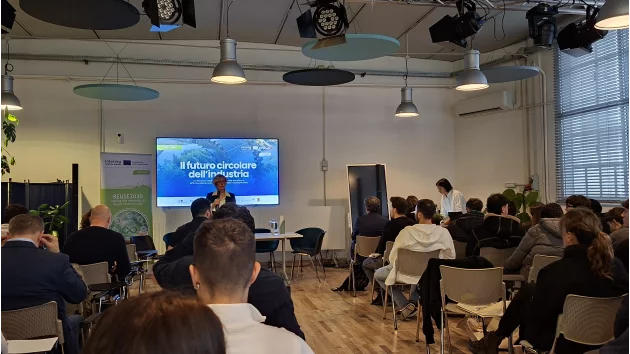
REUSE2030 Final Conference in Milan: From Circular Solutions to Action

On 19 November 2026, the final conference of the European REUSE2030 project took place in Milan, bringing together project partners, representatives of manufacturing companies, researchers and circular economy experts. As a project partner, we attended the event and joined other participants in reviewing the project's key achievements and discussing the future of a circular and resource-efficient economy.

After more than two years of cooperation between partners from Central Europe, the REUSE2030 project is approaching its conclusion. The final conference in Milan provided an opportunity to present the project results, exchange experiences and discuss how the challenges of the circular transition in the manufacturing industry can be transformed into concrete opportunities for innovation.

During the opening sessions, Marco Frey from Scuola Superiore Sant’Anna shared his perspective on the future of a more circular industry, while Dr Caterina Rinaldi from ENEA highlighted the importance of Life Cycle Assessment (LCA) in measuring sustainability and supporting industrial decision-making.

A central part of the event was dedicated to a roundtable discussion, during which representatives of industry and business support organisations discussed practical experiences, challenges and opportunities related to the circular transformation. Particular attention was also given to cooperation and synergies with the European projects MISSION4WATER and MASTERY.

An important part of the conference was the presentation of two digital tools developed within the REUSE2030 project – the Zero Carbon Tool and the Digital Circular Inventory. Both tools are designed to support companies in their transition towards more circular, sustainable and resource-efficient manufacturing processes.

The event concluded with an informal networking session and an exchange of experiences among project partners, companies and experts.

Prior to the final conference, we also attended the last REUSE2030 project partner meeting, where we reviewed the work completed, key results and remaining activities ahead of the project's official conclusion on 30 November 2026.

Although the REUSE2030 project is formally coming to an end, its results, developed tools and established partnerships provide an important foundation for further advancing the circular economy in the manufacturing industry. The final conference was therefore not only an opportunity to reflect on our shared achievements, but also to look ahead – towards the continued use of the developed solutions and new opportunities for collaboration.