
GET INSPIRED


By adopting eco-friendly and digital solutions across production, operations, administration, marketing, and sales, businesses can reduce their environmental impact while enhancing and market appeal. Embrace these efficiency strategies to position your company at the forefront of the green economy. Embrace these strategies to position your company at the forefront of the green economy.

OUTBOUND LOGISTICS

Activities involved in converting the inputs into finished products and services. This includes manufacturing, assembling, packaging and testing.

READ MORE

CUSTOMER SERVICE

Supporting and enhancing the product or service after sale, including customer support, warranties, repairs and maintenance.

READ MORE

OPERATIONS

The process of transforming inputs into finished goods or services, including tasks like manufacturing, assembling, packaging and testing.

READ MORE

MARKETING & SALES

Promoting and selling products or services through activities like advertising, sales efforts, pricing and managing distribution channels.

READ MORE

INBOUND LOGISTICS

 Receiving, storing, and managing materials or inputs that are essential for the production process.

READ MORE

INFRASTRUCTURE

Company-wide systems and structures that support the entire value chain, such as finance, accounting, legal and organizational structure.

READ MORE

HUMAN RESOURCE MANAGEMENT

Recruiting, training and managing the company's workforce.

READ MORE

TECHNOLOGY DEVELOPMENT

Engaging in research, innovation and technological advancements to improve products or services.

READ MORE

PROCUREMENT

Sourcing and purchasing materials or inputs required for production.

READ MORE

REUSE 2030 Transnational Meeting Highlights Collaboration on Circular Solutions for SMEs

Mileva Marčič   • 16 mar 2026 • 2 min read

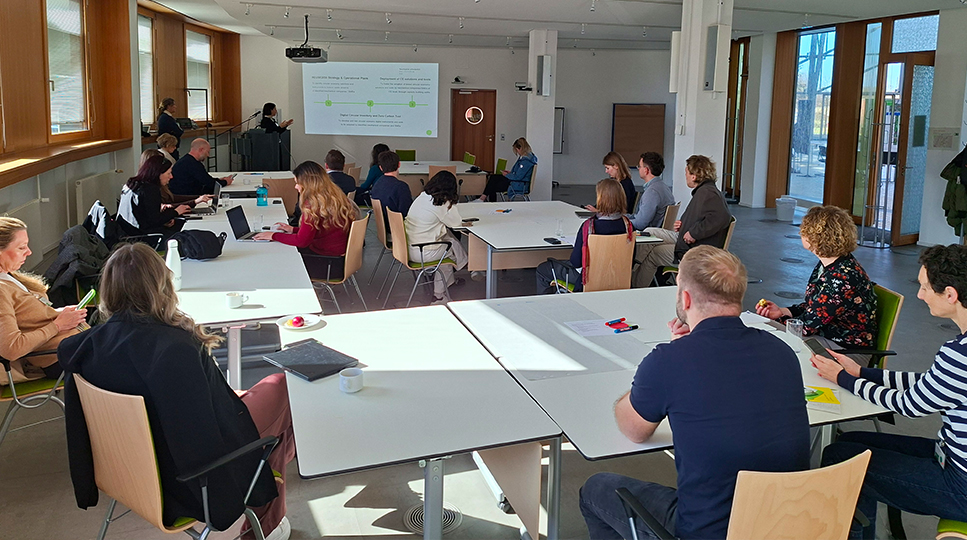
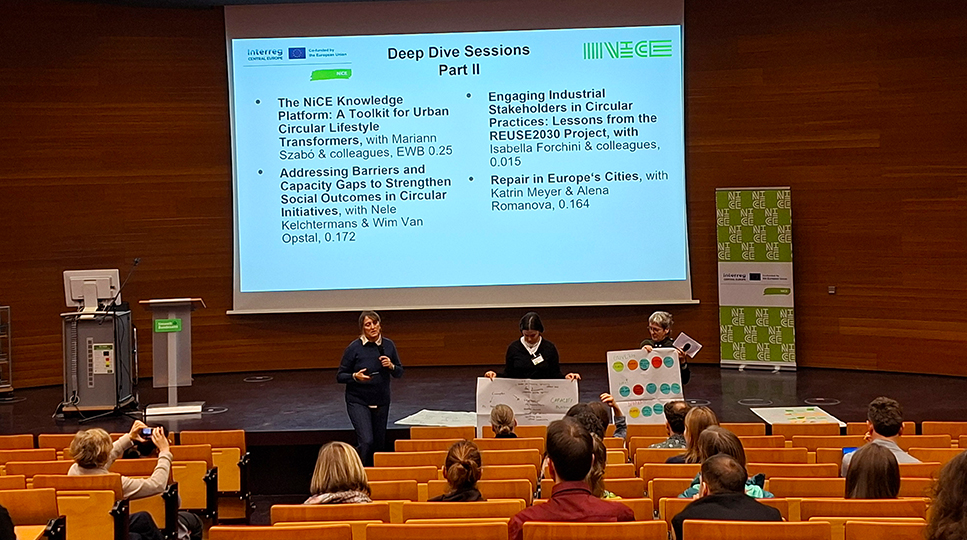
On 12 March 2026, the REUSE 2030 Transnational Meeting took place during the NiCE Conference, organised by the Umweltbundesamt – German Environment Agency. The event was intended for local and regional public authorities, research organisations, and SMEs to exchange knowledge and discuss the next steps for accelerating the circular transitions.

The main objective of the meeting was to present the results of the testing phase of two newly developed REUSE 2030 digital tools – the Zero Carbon Tool and the Circular Inventory. These tools were tested together with SMEs to assess their usability and their potential to support businesses. 

Participants also discussed how these tools could be further improved and expanded within the upcoming REUSE 2030 capacity building paths, which represent the next phase of the project and aim to support organisations and businesses in implementing circular solutions in practice.

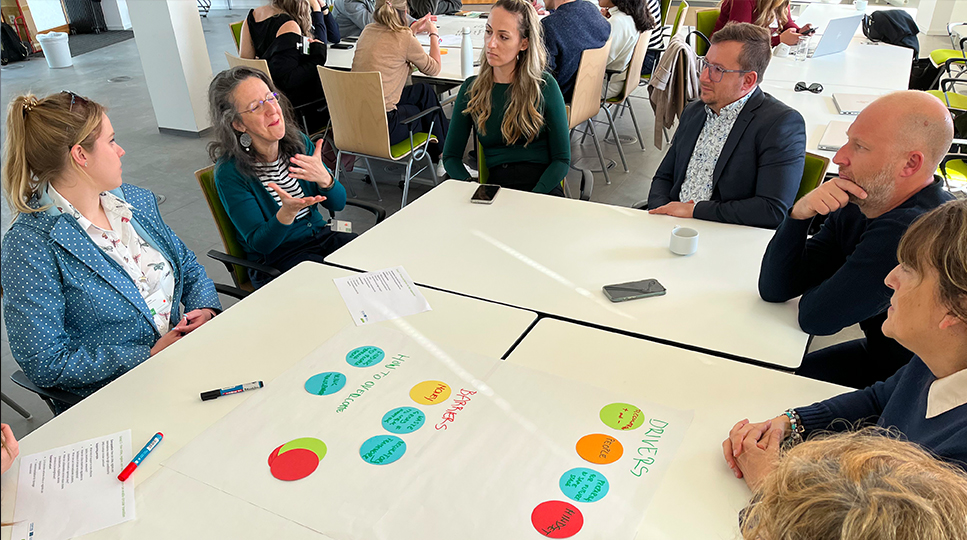
A key part of the meeting was an interactive brainstorming session, where participants collaboratively explored four important topics shaping the future of circular ecosystems:
• Drivers and barriers for SME engagement 
• The role of cities, regions, and value-chain actors in enabling the circular transition
• Digital tools as enablers of circular ecosystems
 Capacity building for long-term circular transformation

The insights and feedback gathered during the session will directly contribute to the further development of the REUSE 2030 tools and the design of future capacity building paths. 

VideoB2GH_preview.pngVideoB2GH_preview.pngVideoB2GH_preview.png